Hey there! I want to share something funny that happened to me the other day. I was trying to explain similes to my little cousin, and at first, he looked as confused as a cat in a swimming pool. I realized that sometimes learning about similes can feel tricky, like trying to catch clouds with your hands.
But then, I decided to make it fun! I started showing him examples from things around us. I said, “Your smile is like sunshine,” and he actually smiled and said, “Oh, I get it now!” I felt so happy because I could see that he understood.
I made this Similes Worksheet to help you learn in the same fun way I helped my cousin. You’ll get to see how to compare things using words like “as” or “like,” and soon, making similes will feel as easy as pie. Just like I handled the confusion with my cousin, you’ll handle these exercises like a pro!
What is a Simile? 🤔💡
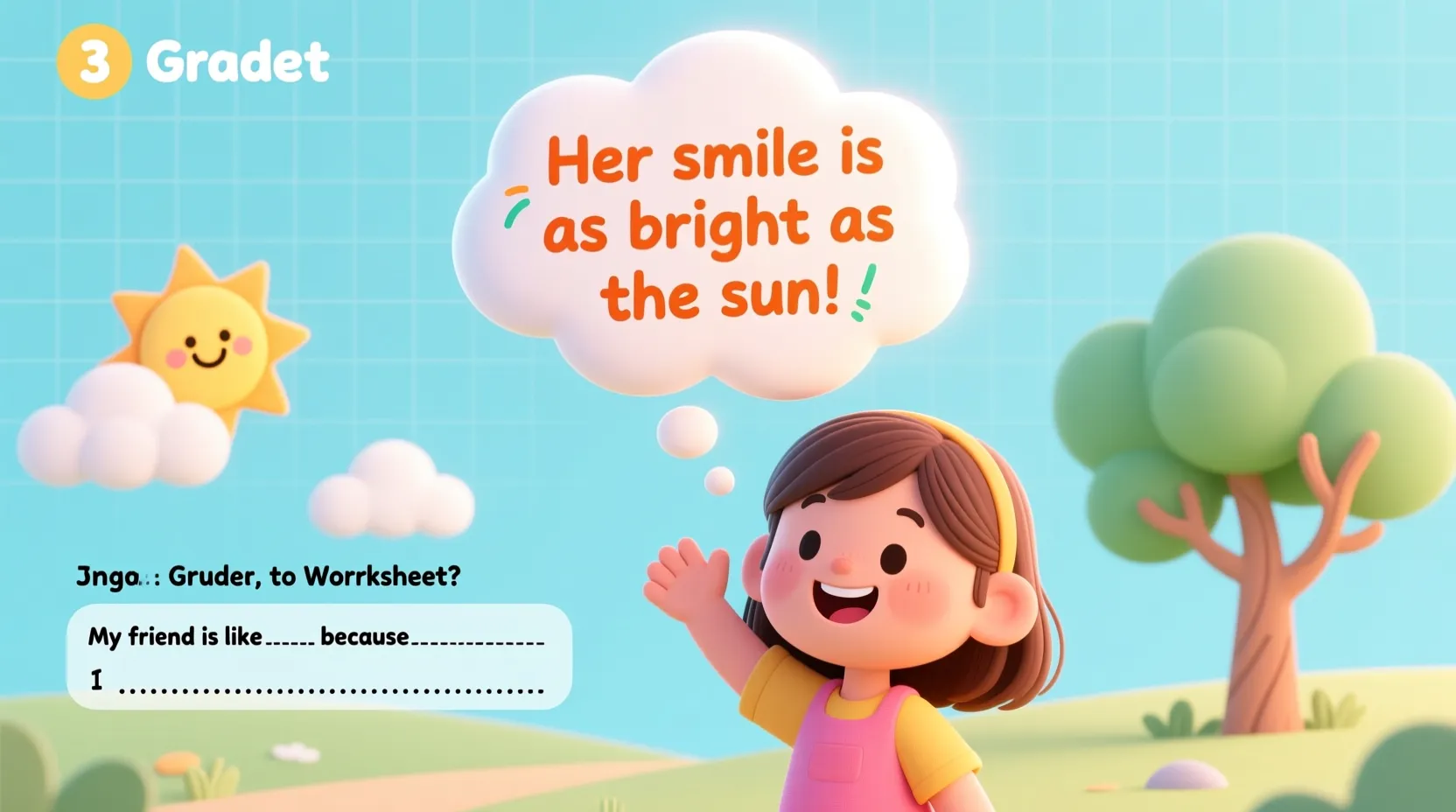
A simile is a figure of speech that compares two unlike things using “like” or “as”. It is one of the easiest and most effective ways for children to enhance their writing.
Example:
- “Her smile was as bright as the sun.” ☀️
- “The cat was as quiet as a whisper.” 🐱
Similes help children express emotions, describe scenes vividly, and develop stronger communication skills. They are essential for creative writing and language development in grade 3.
Why Similes Are Important for Grade 3 Students 🎓
- Boost Creativity: Similes encourage children to think outside the box and make imaginative connections.
- Enhance Vocabulary: Comparing objects helps students learn new words naturally.
- Improve Writing Skills: Descriptive writing becomes more vivid and engaging.
- Develop Critical Thinking: Choosing the right comparison requires understanding characteristics deeply.
How to Use This 200+ Similes Worksheet 📝
Our worksheets are structured for easy comprehension and fun learning. Each section introduces similes in an interactive way:
- Identify the Simile: Students spot similes in sentences.
- Complete the Simile: Fill-in-the-blank exercises to practice creativity.
- Create Your Own: Encourages original writing using learned similes.
- Illustrate Similes: Visual learning through drawing and coloring.
This approach ensures students learn by doing, making similes a natural part of their vocabulary.
Nature Similes 🌳🍂
Nature is full of inspiration. Comparing elements of nature to familiar objects helps students visualize and express themselves.
- “The clouds were as fluffy as cotton candy.” ☁️
- “The river flowed like a silver ribbon.” 🌊
- “The tree stood as tall as a giant.” 🌲
Worksheet Tip: Ask students to observe the outdoors and write their own nature similes.
Animal Similes 🐶🐦
Animals provide endless opportunities for lively comparisons:
- “The dog ran as fast as lightning.” ⚡
- “The owl was as wise as a professor.” 🦉
- “The butterfly fluttered like a tiny rainbow.” 🦋
Activity: Match animals with actions to create your own similes.
Food Similes 🍎🍫
Food is relatable for kids and can make similes tasty and memorable:
- “Her cheeks were as red as cherries.” 🍒
- “The cake was as soft as a cloud.” 🎂
- “The lemonade was as sweet as honey.” 🍯
Fun Exercise: Let students describe their favorite snacks using similes.
Emotion Similes 💖😢
Similes are a powerful tool for expressing feelings:
- “He was as happy as a bird in spring.” 🐦
- “She felt as nervous as a cat in a room full of dogs.” 🐱
- “He was as brave as a lion.” 🦁
Worksheet Tip: Encourage students to connect emotions with experiences.
School Life Similes 🎒📚
Grade 3 students can relate similes to their daily school experiences:
- “The pencil was as sharp as a needle.” ✏️
- “The classroom was as noisy as a jungle.” 🌿
- “The homework was as heavy as a backpack full of books.” 🎒
Activity: Have students create similes about their teachers, classmates, or favorite subjects.
Fun and Silly Similes 🤪🎈
Similes don’t always have to be serious—they can be playful and hilarious:
- “He jumped as high as a kangaroo on a trampoline.” 🦘
- “Her hair was as wild as spaghetti noodles.” 🍝
- “The cat tiptoed like a ninja in socks.” 🥷
Worksheet Tip: Let students invent their own funny similes to share with friends.
Seasonal Similes 🍁❄️
Seasons are rich with imagery that helps students connect words with visuals:
- “The snow was as soft as feathers.” ❄️
- “The autumn leaves fell like golden coins.” 🍂
- “The summer sun was as hot as a frying pan.” ☀️
Exercise: Draw a seasonal scene and add similes to describe it.
Color Similes 🎨🌈
Colors can be described using bright and imaginative comparisons:
- “Her dress was as blue as the ocean.” 🌊
- “The flowers were as red as rubies.” 🌹
- “The sky turned as pink as cotton candy at sunset.” 🌅
Activity: Students match colors to objects and create their own similes.
Object Similes 🏠🪀
Everyday objects can be vividly described using similes:
- “The chair was as hard as a rock.” 🪨
- “The blanket was as soft as a cloud.” ☁️
- “The clock ticked like a marching drum.” 🥁
Tip: Encourage students to look around their home and describe items creatively.
Similes in Storytelling 📖✨
Similes make stories more engaging and memorable:
- “The hero ran as fast as a rocket to save the day.” 🚀
- “The dragon’s breath was as hot as molten lava.” 🐉
- “The princess’s laugh was like music in the wind.” 🎵
Worksheet Idea: Students write a short story using 5–10 similes from the worksheet.
Sensory Similes 👂👀👃👄
Similes can describe senses vividly—sight, sound, taste, touch, and smell:
- “The bell rang as loud as thunder.” ⛈️
- “The cake smelled as sweet as flowers in spring.” 🌸
- “The blanket felt as warm as a hug from mom.” 🤗
Activity: Ask students to describe their favorite sensory experiences using similes.
Creative Simile Challenges 🧠🔥
Challenge students to think beyond the obvious:
- “His excitement bubbled like soda on a summer day.” 🥤
- “Her ideas flew like butterflies in a meadow.” 🦋
- “The car zoomed like a rocket chasing the stars.” 🚗💨
Worksheet Tip: Offer partially completed similes and let students finish them creatively.
Similes for Practice and Fun 🎉✏️
Here’s a mini list for practice:
- “The baby slept like a log.”
- “The rain fell like tiny diamonds.”
- “The music was as soothing as a gentle stream.”
Activity: Encourage repetition and practice through writing, speaking, and illustrating.
Tips for Teaching Similes Effectively 👩🏫👨🏫
- Use visual aids and real objects to make comparisons tangible.
- Encourage students to observe the world around them.
- Combine reading and writing exercises for deeper understanding.
- Praise creativity—there’s no wrong simile if it makes sense.
- Incorporate games and challenges to make learning fun.
Why Worksheets Matter for Grade 3 Students 📄✅
Worksheets provide a structured and interactive learning experience. They help students:
- Understand the concept of similes clearly.
- Practice writing creatively.
- Reinforce learning through repetition and fun exercises.
- Build confidence in expressive writing.
Pro Tip: Make worksheets colorful, engaging, and relatable to hold students’ attention.
Similes as a Stepping Stone to Figurative Language 🌟
Learning similes is not the end—it’s the gateway to metaphors, idioms, and other figurative language. Mastering similes prepares students to:
- Write imaginative stories.
- Understand literature more deeply.
- Express complex ideas simply and vividly.
Encouraging Daily Practice 🗓️✍️
- Daily journal: Have students write 1–2 similes a day.
- Observation game: Pick objects or animals to describe creatively.
- Simile challenge: Compare something ordinary in an extraordinary way.
Even five minutes a day can make a huge difference in creativity and language skills.
Conclusion:
Similes are more than comparisons—they are windows to imagination. For grade 3 students, mastering similes builds confidence, creativity, and expressive power.
These worksheets are designed to make learning engaging, interactive, and memorable, helping young writers bring their ideas to life.
By practicing with 200+ similes worksheets, children not only learn language mechanics but also experience the joy of creating vivid imagery.
Encourage them to play, imagine, and write boldly—because every simile they create is a step toward becoming a confident, imaginative writer. ✨
Remember: Language is magic, and similes are the sparks that make it shine! 🌈📝
250+ Similes for Large: Creative Ways to Describe Big Things
100+ Similes Exercises for Grade 6 (With Answers)
150+ Similes for Loving: Expressions That Shine, Warm, and Transform 💖